.png?width=64&height=64&name=artificial-intelligence%20(3).png)




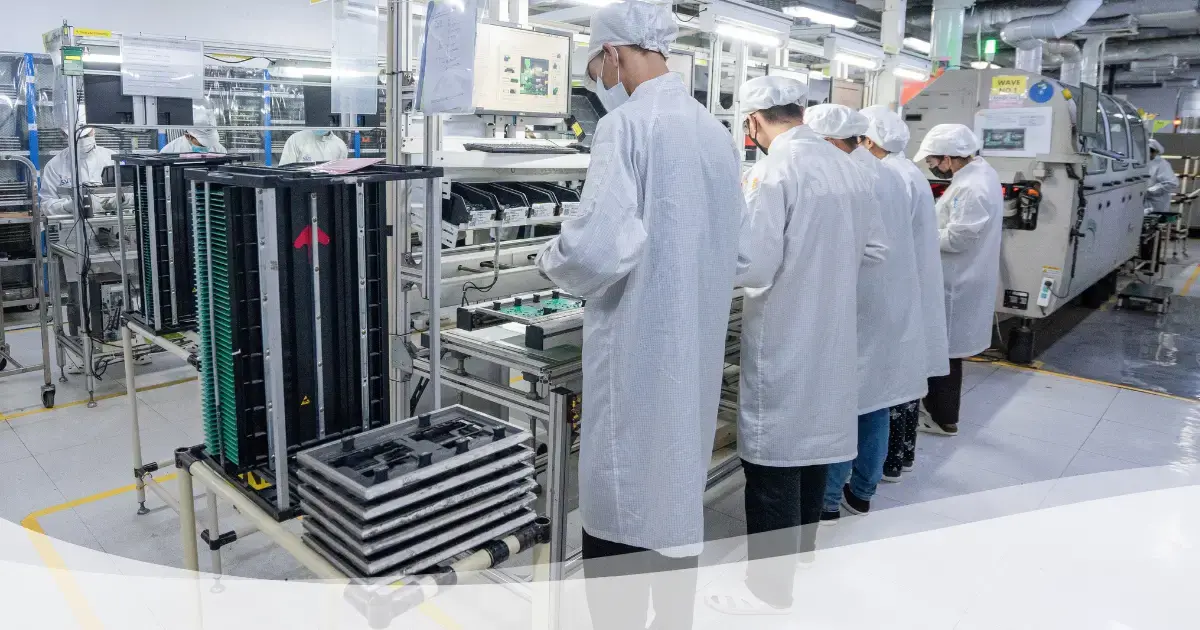
Every OEM is under pressure to bring products to market faster. Shorter development cycles, compressed NPI timelines, and aggressive launch targets have become the norm across electronics manufacturing.
Yet in practice, Time to Market is often slowed down not by capacity or design — but by uncertainty. When yield drops, test failures appear, or inconsistencies emerge during ramp-up, engineering teams lose valuable time trying to answer a simple question:
What actually happened on the production line?
This is where traceability becomes a critical — and often underestimated — accelerator of Time to Market.
Why Time to Market Depends on Visibility
In electronics manufacturing, speed is driven by clarity. The faster engineering teams can understand how materials, processes, machines, and test results interact, the faster they can make informed decisions and move products forward with confidence.
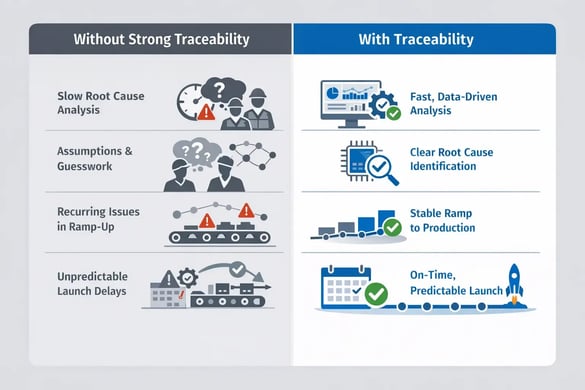
When traceability is limited or fragmented, teams spend valuable time searching for information instead of solving problems. Root cause analysis becomes slower because data must be manually gathered from multiple sources, often after the issue has already disrupted production. In these situations, engineers are forced to rely on assumptions or incomplete information, increasing the risk of misdiagnosis and repeated failures.
This lack of visibility often causes issues to reappear during the ramp-up phase, when production volume increases and process variation becomes more pronounced. Without clear traceability, it is difficult to determine whether a failure is related to materials, process conditions, machine behavior, or test parameters. As a result, corrective actions may address symptoms rather than the true root cause.
For OEMs, the impact is significant. Engineering delays compound, yield stabilization takes longer, and launch schedules become harder to predict. Instead of moving quickly from validation to volume production, teams are forced into reactive problem-solving—putting Time to Market at risk.
Traceability Beyond Compliance
Traceability is often associated with compliance or audit requirements. However, from an engineering perspective, its real value lies in speed.
Traceability enables manufacturers to:
- Link test results to specific material lots
- Correlate failures with machine parameters
- Identify process drift early
- Isolate affected units instead of stopping entire lines
For OEMs, this means fewer delays during NPI, faster yield stabilization, and greater confidence when committing to launch schedules.
The Test Engineering Perspective
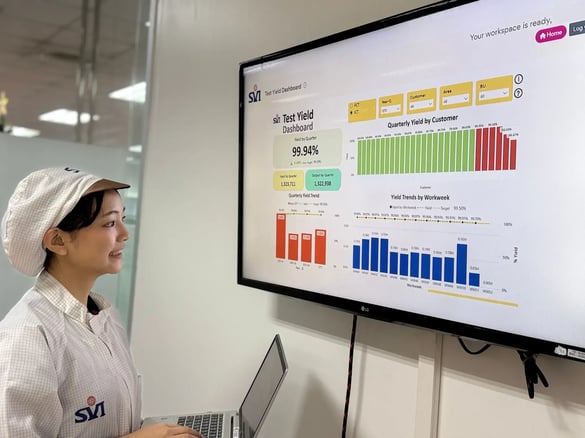
From the Test Engineering viewpoint, traceability is essential whenever production behavior changes unexpectedly — especially during NPI and ramp-up.
When yield drops or failures occur, engineers rely on traceability data to quickly determine whether the root cause is related to:
- material variation
- process settings
- machine & testing environment conditions
- or design-related factors
This ability to narrow down causes quickly is what allows engineering teams to maintain momentum and avoid schedule slip.
How Traceability Supports Every Stage of Time to Market
Traceability plays a role across the entire product lifecycle:
- During NPI:
Faster root cause analysis shortens validation cycles. - During Ramp-Up:
Data-driven adjustments improve first-pass yield and stabilize processes sooner. - During Mass Production:
Rapid issue isolation reduces downtime and protects delivery schedules.
Instead of slowing teams down, traceability enables them to move faster — with confidence.
Why OEMs Should Expect More from Traceability
Not all traceability systems are equal. For OEMs, strong traceability should provide:
- Real-time visibility
- Accurate, reliable data
- Faster engineering response
- Predictable production outcomes
When traceability is built into manufacturing processes from the start, it becomes a strategic advantage — supporting faster launches and more reliable execution.
What’s Next in This Traceability Series
This article introduces why traceability matters for Time to Market.
In the upcoming articles, we will explore how this is achieved in practice, including:
- How data transparency accelerates engineering decisions
- How digital systems and closed-loop tracking reduce recurring issues
- How traceability across assembly and testing speeds up ramp-to-production
- How OEMs benefit from faster launches and stable delivery schedules
Together, these insights show how traceability is not just about quality — but about delivering speed, predictability, and confidence.



 8
8