.png?width=64&height=64&name=artificial-intelligence%20(3).png)






“AI data centers are not built on compute alone — they depend on a hidden layer of infrastructure electronics that keeps everything running.”
Artificial intelligence is often discussed through the lens of powerful processors, advanced algorithms, and hyperscale computing environments. Yet behind every AI workload lies a critical foundation that receives far less attention — the infrastructure electronics responsible for power stability, thermal control, and continuous system monitoring. As AI data centers grow in scale and density, these supporting technologies are becoming increasingly complex, requiring not only advanced engineering but also precise and reliable manufacturing execution. For OEMs developing power, cooling, and infrastructure platforms, success is no longer defined by compute performance alone. It depends on how well the underlying electronics can sustain always-on operations, adapt to evolving requirements, and maintain consistency across global production environments.
While public attention often focuses on high-performance servers and accelerated computing platforms, the operational backbone of an AI data center is built on a complex network of infrastructure systems. Power distribution units regulate energy flow, thermal management electronics maintain stable operating conditions, and monitoring hardware ensures visibility across critical environments. As AI workloads drive higher power density and tighter reliability requirements, these supporting electronics are evolving from passive components into intelligent, mission-critical systems. Understanding this broader ecosystem is essential for OEMs seeking to scale AI infrastructure efficiently — because long-term performance depends not only on compute capability, but on the stability of the electronics that keep it running.
AI Data Centers Are More Than Compute
When discussing AI infrastructure, it is easy to focus solely on processing power and advanced computing hardware. However, modern AI data centers rely on a broader ecosystem of infrastructure electronics that enable stable operations behind the scenes. From power management and thermal control to system monitoring and connectivity platforms, these supporting layers form the operational backbone that allows AI workloads to run continuously and reliably. As compute performance accelerates, the role of infrastructure electronics becomes increasingly critical — ensuring that energy delivery, heat management, and environmental conditions remain precisely controlled.
Power Distribution & Monitoring Electronics
One of the most critical layers within AI data center infrastructure is the electronics that manage and monitor power delivery. As AI workloads demand higher performance, energy consumption increases significantly, placing greater pressure on power stability and efficiency. Power distribution units (PDUs), monitoring modules, and control boards play a central role in regulating voltage, balancing loads, and ensuring consistent operation across complex environments.
Unlike traditional data center systems, AI-driven infrastructure must handle rapid fluctuations in power demand while maintaining uninterrupted uptime. This requires infrastructure electronics designed for durability, precision assembly, and long operational lifecycles. Accurate monitoring capabilities are equally important, providing real-time visibility into system performance and enabling proactive maintenance before issues escalate. For OEMs developing next-generation power platforms, the reliability of these supporting electronics becomes a defining factor in overall infrastructure resilience.
Cooling & Thermal Control Systems
As AI processing density continues to increase, thermal management has become one of the most significant challenges within modern data center environments. Infrastructure electronics responsible for cooling control — including sensor boards, monitoring interfaces, and system controllers — help maintain stable operating temperatures across high-performance equipment. These technologies enable real-time adjustments to airflow, liquid cooling systems, and environmental conditions, ensuring that critical hardware operates within safe limits.
Unlike conventional cooling solutions, AI infrastructure requires faster response times and greater precision due to higher heat generation and continuous workloads. This places additional importance on the reliability and consistency of the electronics that support thermal management. From accurate sensor integration to robust assembly processes, manufacturing quality directly influences how effectively cooling systems can perform over extended lifecycles. For OEMs, the evolution of AI workloads is driving a shift toward smarter, more responsive infrastructure electronics designed to support always-on operations.
Connectivity & Infrastructure Management Hardware
Beyond power and thermal control, connectivity and infrastructure management hardware form another essential layer within AI data center environments. Gateway devices, monitoring interfaces, and communication modules enable operators to maintain visibility across complex systems, allowing data to flow between equipment, control platforms, and facility management tools. These electronics help transform traditional infrastructure into intelligent environments where performance, energy usage, and system health can be monitored continuously.
As AI deployments expand across hyperscale and edge environments, connectivity electronics must support reliable data transmission while operating under demanding conditions. This increases the importance of consistent manufacturing quality, stable component sourcing, and robust validation processes. For OEMs, infrastructure management hardware is no longer a supporting accessory — it is a critical element that helps ensure operational transparency, scalability, and long-term system reliability.
As infrastructure electronics become more intelligent and operationally critical, the way these systems are manufactured plays an increasingly important role in overall performance. Beyond design innovation, consistent execution across production and validation processes is becoming a defining factor in supporting AI-scale environments.
Why Manufacturing Matters in Always-On Infrastructure
As AI data centers continue to scale, infrastructure electronics are expected to operate continuously under demanding conditions. Unlike consumer electronics with shorter refresh cycles, many power, cooling, and monitoring platforms must maintain stable performance over extended lifecycles while adapting to evolving system requirements. This creates unique challenges for OEMs, where manufacturing consistency becomes just as important as design innovation.
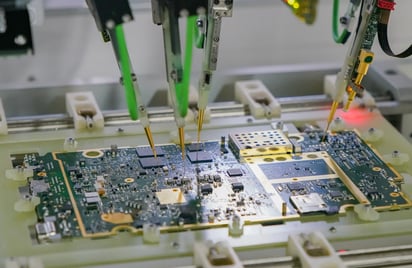
Precision in assembly, component traceability, and rigorous validation processes help ensure that infrastructure electronics can withstand high operating loads and environmental stress. Even minor variations in manufacturing can influence thermal behavior, power stability, or long-term reliability — factors that directly affect uptime in always-on environments. As a result, manufacturing partners are increasingly expected to provide not only production capacity but also structured quality systems, data-driven process control, and the ability to maintain consistency across multiple regions.
In the context of AI infrastructure, manufacturing is no longer a background activity. It plays an active role in enabling scalability, supporting lifecycle stability, and helping OEMs transition from early deployment to sustained global operations.
Supporting the Next Generation of AI Infrastructure Electronics
As AI technologies continue to evolve, the expectations placed on infrastructure electronics will only grow. Higher processing density, increased energy demand, and expanding global deployment models are driving OEMs to rethink how supporting systems are developed and manufactured. Precision assembly, stable component sourcing, and data-driven production strategies are becoming essential factors in ensuring long-term performance across diverse operating environments.
At the same time, infrastructure platforms must balance rapid innovation with lifecycle stability. New cooling approaches, advanced monitoring capabilities, and evolving power architectures require manufacturing processes that can adapt without compromising consistency. For organizations supporting AI infrastructure, the ability to maintain quality across regions while responding to technological change is emerging as a key differentiator.
Conclusion
While AI innovation is often associated with compute performance and advanced software, the reliability of modern data centers ultimately depends on a foundation of well-engineered infrastructure electronics. Power management, thermal control, and connectivity systems work together to maintain operational stability — and their effectiveness is closely tied to the precision and consistency of manufacturing execution. As AI deployments expand worldwide, OEMs are increasingly recognizing that scalable infrastructure is not built on compute alone, but on the dependable electronics that support it behind the scenes.
Explore how precision manufacturing and lifecycle reliability support evolving infrastructure platforms in our latest manufacturing insights.



 6
6